> For the complete documentation index, see [llms.txt](https://developer.supervisely.com/llms.txt). Markdown versions of documentation pages are available by appending `.md` to page URLs; this page is available as [Markdown](https://developer.supervisely.com/app-development/basics/app-json-config/example-2.-app-with-gui.md).
# Example 2. App with GUI
config.json for app with GUI explained
## Introduction
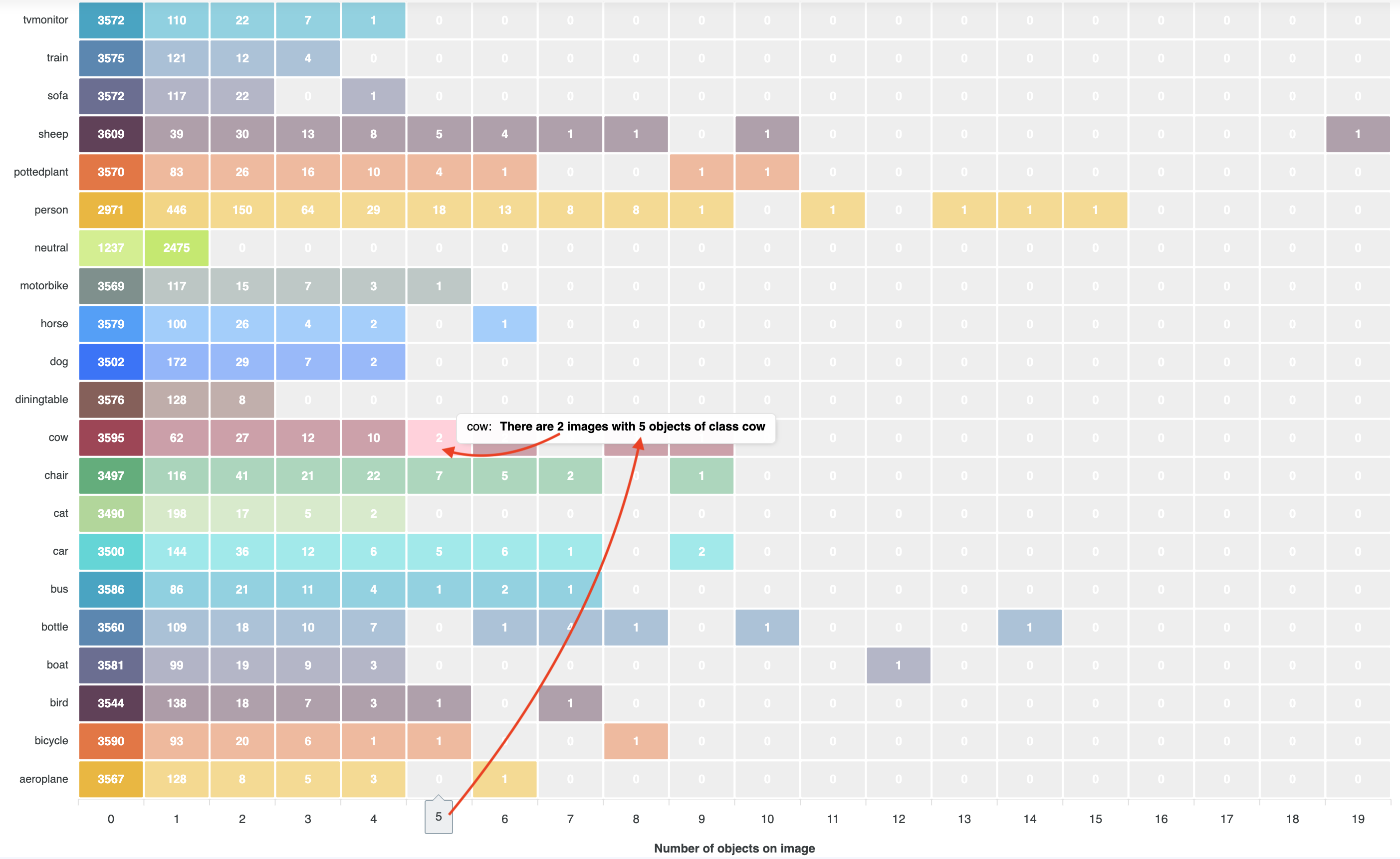
Configuration for apps with graphical user interface are pretty much the same like any other Supervisely apps. In this section we'll look into [`Interactive objects distribution`](https://github.com/supervisely-ecosystem/interactive-objects-distribution) app. Application calculates interactive heatmap chart for every class with objects distribution.
[supervisely-ecosystem/interactive-objects-distribution/config.json](https://github.com/supervisely-ecosystem/interactive-objects-distribution/blob/master/config.json)
```json
{
"type": "app",
"version": "2.0.0",
"name": "Interactive objects distribution",
"description": "Explore images with certain number of objects of specific class",
"categories": [
"images",
"visualization",
"exploration",
"statistics",
"visualization stats"
],
"icon": "https://user-images.githubusercontent.com/12828725/183916661-224ff8cb-a3d1-4b82-a629-def8c6de1db5.png",
"poster": "https://user-images.githubusercontent.com/106374579/187223426-ec7e0fae-8ba9-48fd-b71f-8680cc0f1b49.png",
"entrypoint": "python -m uvicorn src.main:app --host 0.0.0.0 --port 8000",
"port": 8000,
"context_menu": {
"target": ["images_project"],
"context_root": "Report"
},
"min_instance_version": "6.5.22"
}
```
App properties
## Properties
### **`type`**
Type of the Ecosystem entity
```json
"type": "app"
```
### **`version`**
App engine version
```json
"version": "2.0.0"
```
### **`name`**
Name of the app
```json
"name": "Interactive objects distribution"
```
### **`description`**
App description in Ecosystem
```json
"description": "Explore images with certain number of objects of specific class"
```
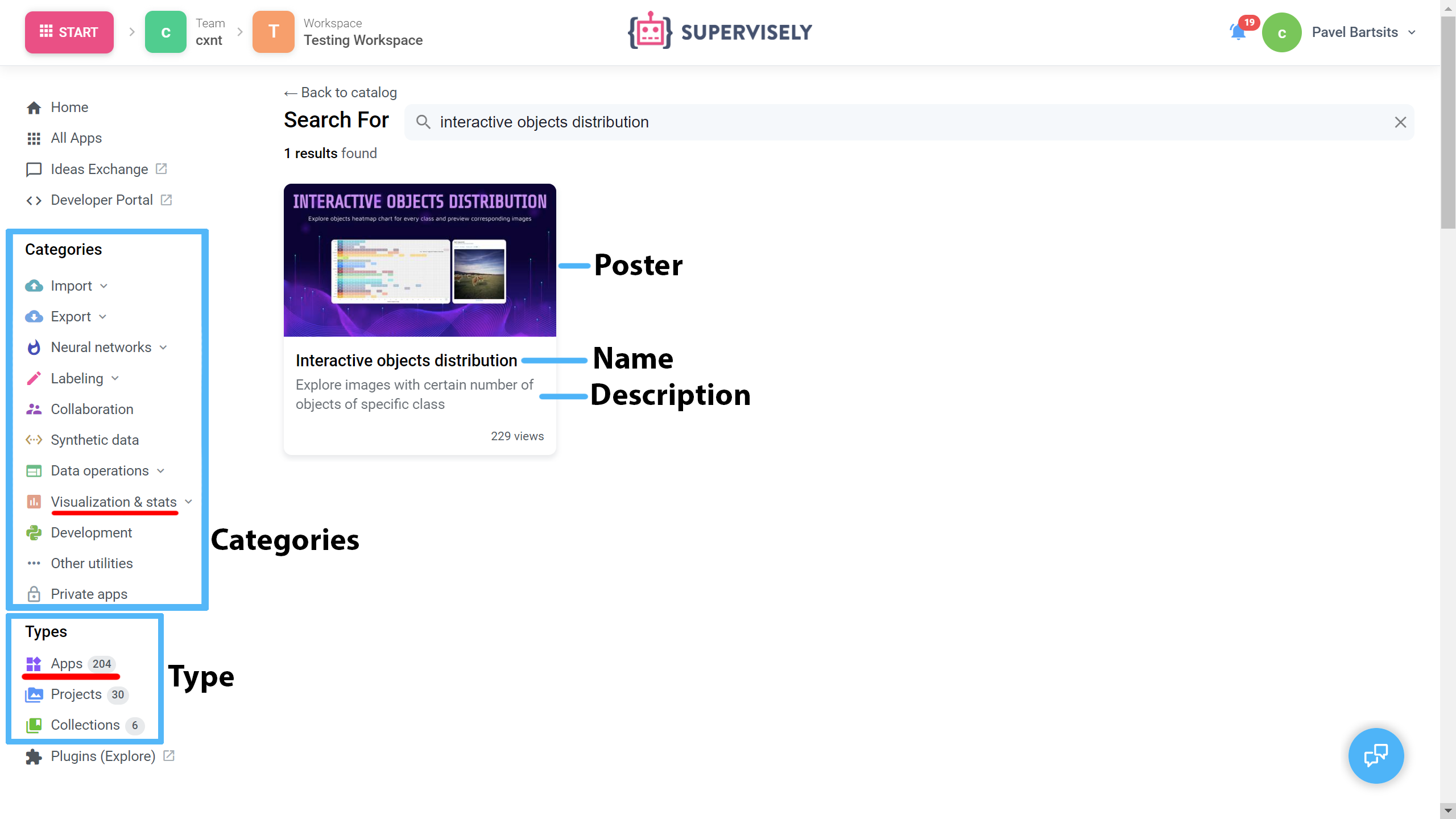
### **`categories`**
List of categories that app are associated with in Ecosystem
App categories
```json
"categories": [
"images",
"visualization",
"exploration",
"statistics",
"visualization stats"
]
```
### **`icon`**
Link to the application icon
```json
"icon": "https://user-images.githubusercontent.com/12828725/183916661-224ff8cb-a3d1-4b82-a629-def8c6de1db5.png"
```
### **`poster`**
Link to the application poster
```json
"poster": "https://user-images.githubusercontent.com/106374579/187223426-ec7e0fae-8ba9-48fd-b71f-8680cc0f1b49.png"
```
### **`entrypoint`**
Instruction for executing app scripts.
**`src.main`** is a relative path to main.py which contains app object **`:app`**
```json
"entrypoint": "python -m uvicorn src.main:app --host 0.0.0.0 --port 8000"
```
### **`port`**
Predefined standard port for the app
```json
"port": 8000
```
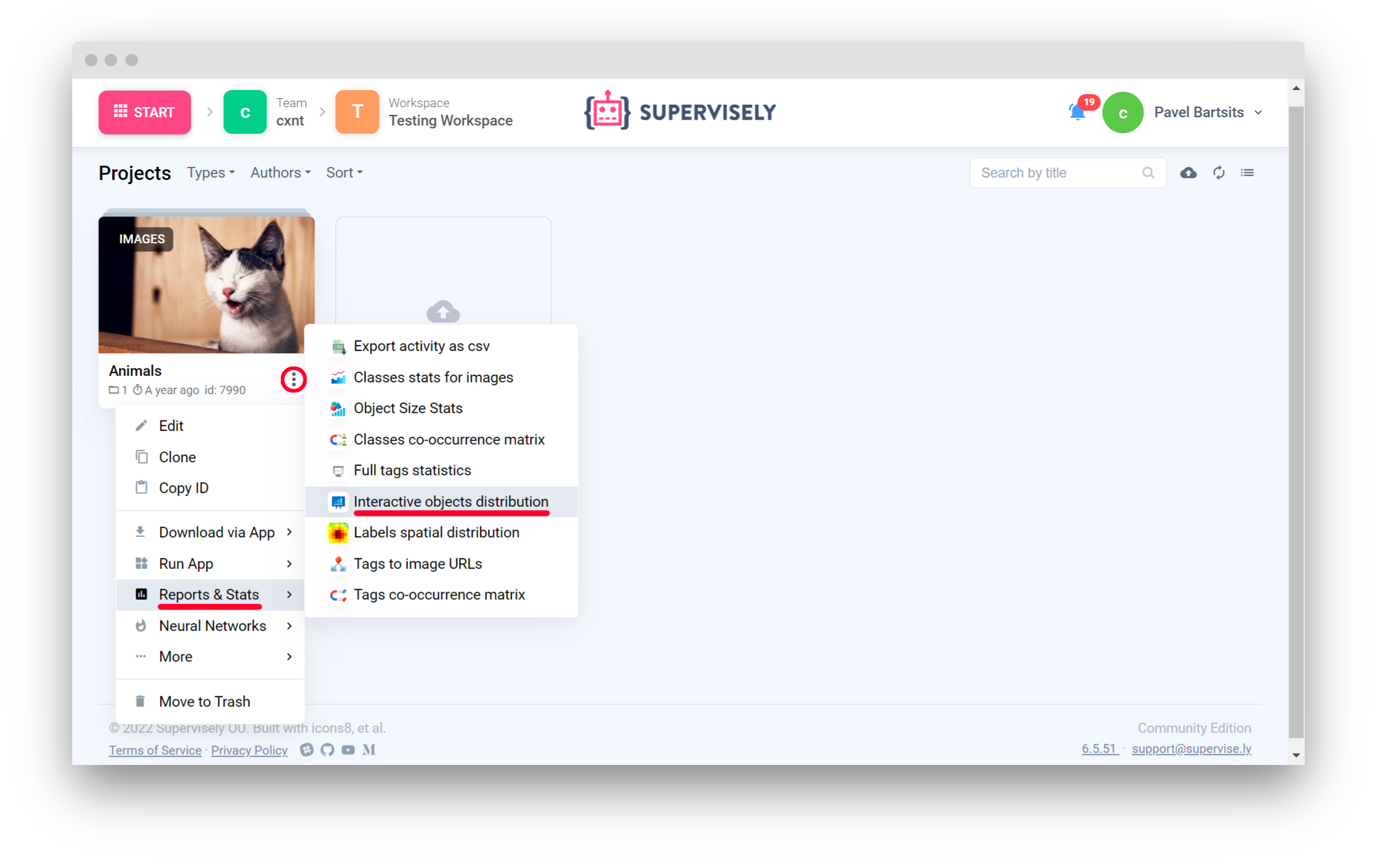
### **`context_menu`**
App context menu configuration options. If not specified, app can be launched only from Ecosystem
`context_category` - sub section in context menu
`target` - determines where the application can be launched from
```json
"context_menu": {
"target": ["images_project"],
"context_root": "Report"
}
```
### **`min_instance_version`**
Minimum instance version to launch app. Current instance version can be found at the bottom right corner at the Supervisely

```json
"min_instance_version": "6.5.22"
```