> For the complete documentation index, see [llms.txt](https://developer.supervisely.com/llms.txt). Markdown versions of documentation pages are available by appending `.md` to page URLs; this page is available as [Markdown](https://developer.supervisely.com/app-development/widgets/status-elements/dialogmessage.md).
# DialogMessage
## Introduction
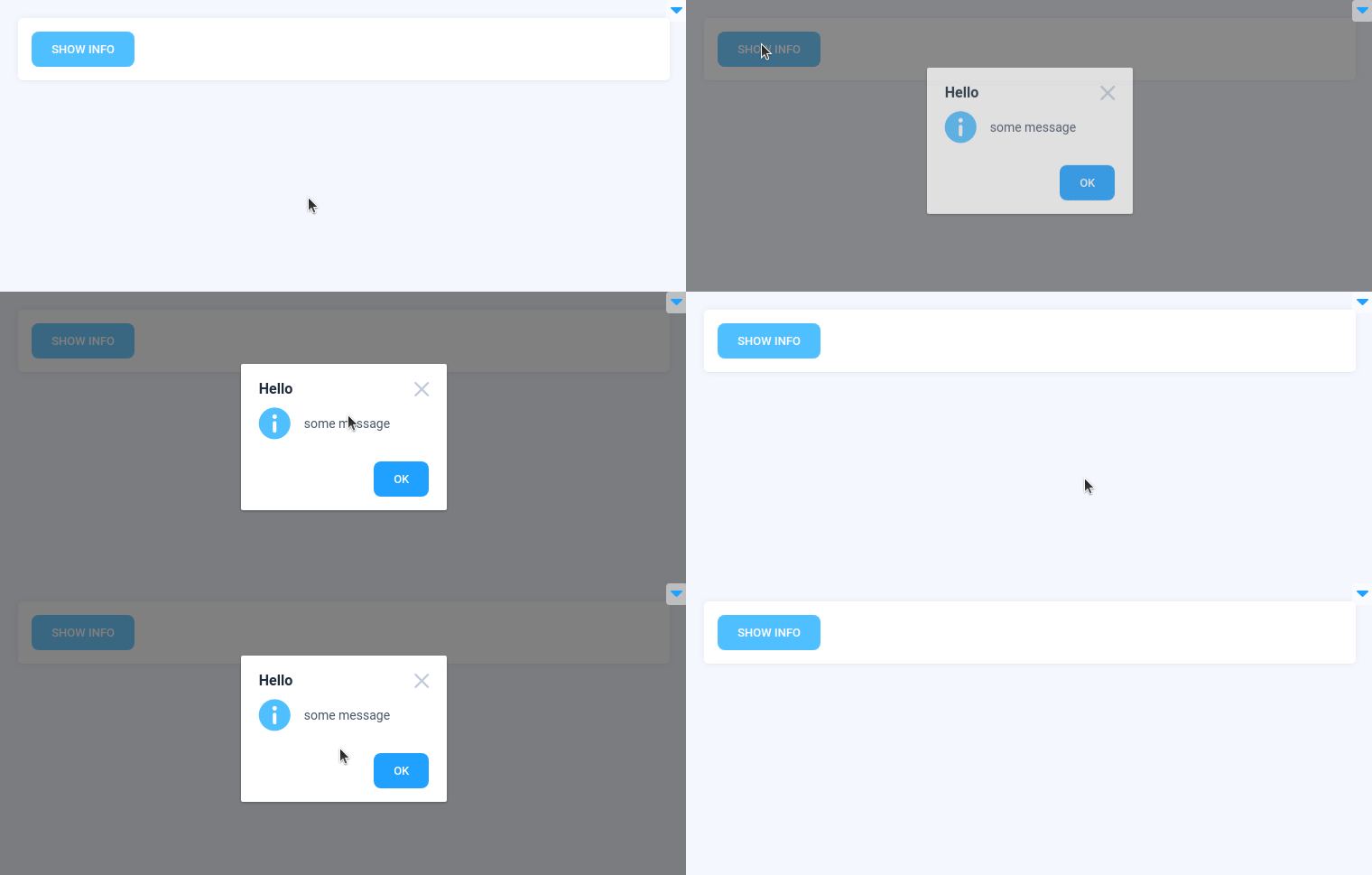
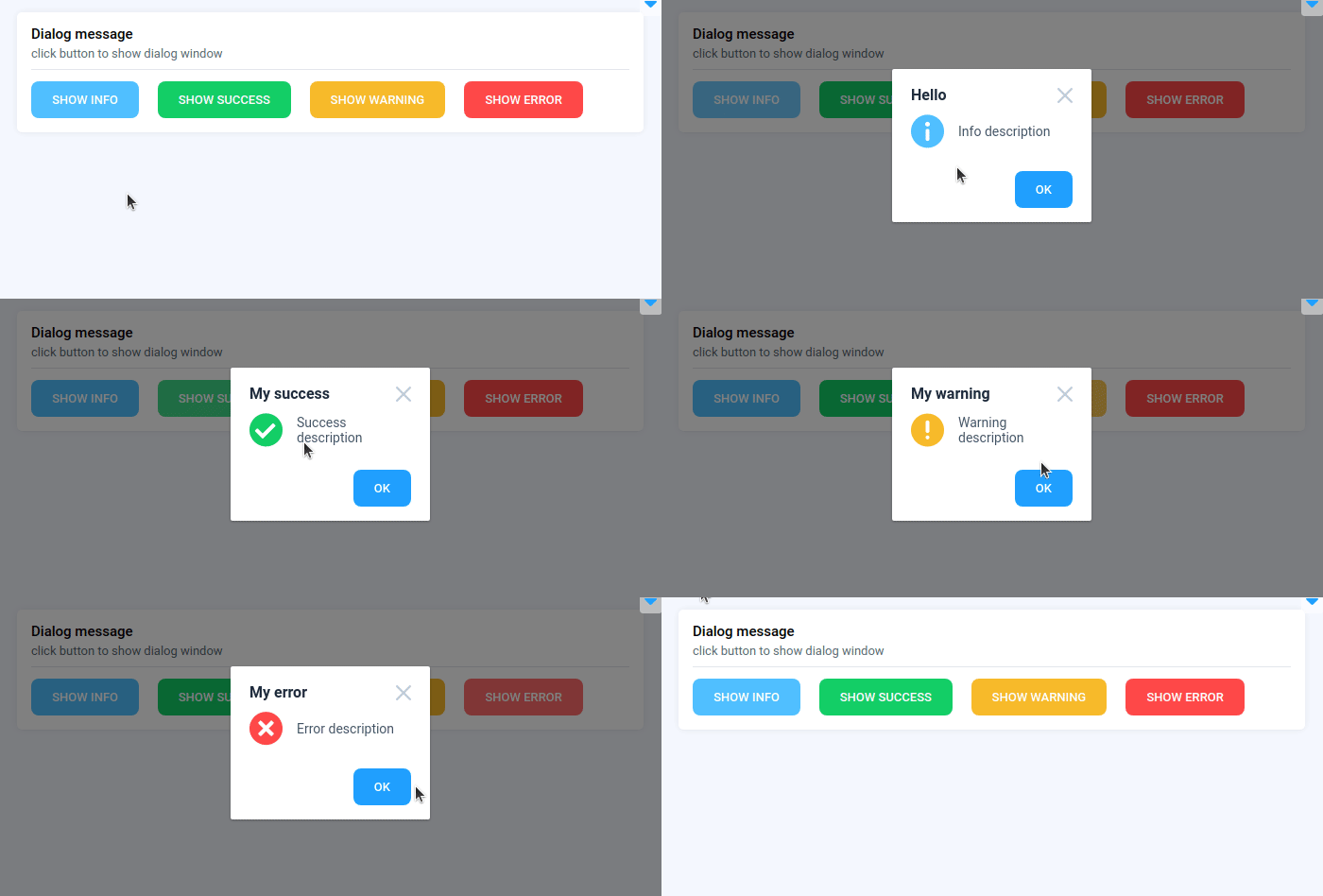
**`show_dialog`** widget in Supervisely is a function that is used to display a modal dialog window with customizable content. Users can specify the `title`, `message`, and `status` of the dialog window, such as informational, success, warning, or error.
## Function signature
```python
sly.app.show_dialog(
title,
description,
status="info",
)
```
## Parameters
| Parameters | Type | Description |
| :-----------: | :----------------------------------------------: | :----------------------------: |
| `title` | `str` | Dialog window title |
| `description` | `str` | Dialog window description text |
| `status` | `Literal["info", "success", "warning", "error"]` | Dialog window status |
### title
Dialog window title.
**type:** `str`
```python
sly.app.show_dialog(title="Hello", description="some message")
```
### description
Dialog window description.
**type:** `str`
```python
sly.app.show_dialog(title="Hello", description="some message")
```
### status
Dialog window status.
**type:** `Literal["info", "success", "warning", "error"]`
**default value:** `info`
## Mini App Example
You can find this example in our Github repository:
[ui-widgets-demos/status elements/004\_dialog\_message/src/main.py](https://github.com/supervisely-ecosystem/ui-widgets-demos/blob/master/status%20elements/004_dialog_message/src/main.py)
### Import libraries
```python
import os
import supervisely as sly
from dotenv import load_dotenv
from supervisely.app.widgets import Card, Button, Flexbox
```
### Init API client
First, we load environment variables with credentials and init API for communicating with Supervisely Instance:
```python
load_dotenv("local.env")
load_dotenv(os.path.expanduser("~/supervisely.env"))
api = sly.Api()
```
### Initialize `Button` widgets we will use
```python
info_btn = Button("Show info", button_type="info")
success_btn = Button("Show success", button_type="success")
warning_btn = Button("Show warning", button_type="warning")
error_btn = Button("Show error", button_type="danger")
```
### Create app layout
Prepare a layout for app using `Card` widget with the `content` parameter.
```python
# create new cards
card = Card(
title="Dialog message",
description="click button to show dialog window",
content=Flexbox([info_btn, success_btn, warning_btn, error_btn]),
)
```
### Create app using card
Create an app object with card parameter.
```python
app = sly.Application(layout=card)
```
### Add functions to control `Button` widgets from python code and use `show_dialog` widget
```python
@info_btn.click
def show_info():
sly.app.show_dialog(
title="Hello",
description="Info description",
status="info",
)
@success_btn.click
def show_success():
sly.app.show_dialog(
title="My success",
description="Success description",
status="success",
)
@warning_btn.click
def show_waring():
sly.app.show_dialog(
title="My warning",
description="Warning description",
status="warning",
)
# or
# raise sly.app.DialogWindowWarning(title="My warning", description="Warning description")
@error_btn.click
def show_error():
sly.app.show_dialog(
title="My error",
description="Error description",
status="error",
)
```